

Yeshe Tsogyal
Within the Nyingma lineage, there is one woman whose stature stands nearly alongside Padmasambhava himself — Yeshe Tsogyal (Tibetan: ཡེ་ཤེས་མཚོ་རྒྱལ, "Ocean of Wisdom and Victory"). She was the consort and principal disciple of Guru Rinpoche, and the foremost compiler and co-concealer of the Nyingma terma (hidden treasure) teachings. Later traditions revere her as an emanation of Tara, making her one of the supreme examples of female realization in Tibetan Buddhism.
To understand Nyingma, one cannot speak only of Padmasambhava. And to understand why the terma teachings survived the great persecution and re-emerged intact, one cannot leave her out.

1. The Daughter of Kharchen
Yeshe Tsogyal was born in the eighth century into the noble Kharchen family of Tibet, the daughter of an imperial minister. Her biographies record auspicious signs at birth and, from childhood, a natural inclination toward the Dharma and contemplative life.
In the Tibetan society of her time, women were largely confined to subordinate roles. Yet her life shows that she did not drift passively into practice. Through several turns of fate, she chose, again and again, a life oriented toward realization. For anyone exploring the place of women in contemplative traditions, that agency remains strikingly relevant.
2. From Princess to Yoginī
King Trisong Detsen once received her into the royal court. Yet she held no attachment to palace life. When the conditions matured, she was ordained and taken as a disciple and spiritual consort by Padmasambhava. In Nyingma narrative, the consort is not a spouse in the ordinary sense, but a practice partner who accomplishes the vajra activity of the Dharma through the union of wisdom and skillful means.
Under Padmasambhava she trained in charnel grounds and remote sacred sites, practicing tummo, illusory body, and Dzogchen. The biographies stress her endurance: many male disciples gave up along the way, while she persisted and, in the end, attained realization inseparable from her teacher's.
3. The Compiler of the Terma
Yeshe Tsogyal's most irreplaceable role in Nyingma history is the compilation and protection of the terma. Foretelling the persecution under Langdarma, Padmasambhava concealed vast teachings, rituals, sacred objects, and prophecies within rocks, lakes, and the spaces of the sky. Yeshe Tsogyal was both a co-concealer of these treasures and one of the few who could fully remember and compile them.
In the mid-ninth century, Langdarma suppressed the Buddhadharma: monasteries were destroyed, the sangha dispersed. It was precisely the teachings hidden in advance that were later recovered, one by one, by the treasure-revealers (tertöns), restoring the Nyingma lineages. One could fairly say that without her compiling and guarding, many Nyingma practices we read today might have been lost.
4. Tara and the Female Path
Nyingma traditions widely regard Yeshe Tsogyal as an emanation of Tara, the female buddha of compassion and liberation. Tara embodies the ideal of liberating beings from suffering through a feminine form — making Yeshe Tsogyal a figure of belonging and example for women practitioners: realization is not gated by gender, and a woman's wisdom and compassion can reach full awakening.
This also explains why, in many Nyingma and Kagyu settings, practices of Yeshe Tsogyal and Tara circulate side by side. Symbolically they point to the same truth: the capacity to awaken was never bound to a male or female form.
5. Why She Is Still Remembered
The living force of her story today lies less in the miraculous than in what it demonstrates: a life not defined by circumstances. From a noble daughter, to a figure of the court, to an ascetic yoginī, she kept realization as her refuge. Nyingma monasteries include her beside Padmasambhava in the tenth-day tsok offerings, and her prayers and mantras are still recited by countless practitioners.
For readers seeking the female dimension of Tibetan Buddhism, or a contemplative thread that is not centered on male authority, Yeshe Tsogyal is an unavoidable bridge.
6. Common Questions
Question: Was Yeshe Tsogyal a real historical figure?
Answer: Yes. She was a real eighth-century Tibetan practitioner, recorded in Tibetan histories and the Nyingma terma tradition. The miraculous elements of her biography are devotional narrative, but her historical core — Kharchen birth, discipleship under Padmasambhava, and role as terma compiler — is credible.
Question: What is her relationship to Tara?
Answer: Nyingma tradition holds her to be an emanation of Tara; the two point, symbolically, to the same compassionate wisdom appearing in female form. She is honored as the archetype of female realization, not merely as Padmasambhava's companion.
Question: Why are female practitioners so honored in Nyingma?
Answer: Because her accomplishment proves that liberation is not conditioned by gender. Her presence gives women practitioners a direct sense of belonging and a model, and it means the Nyingma contemplative tradition was never, from the start, male-centered.
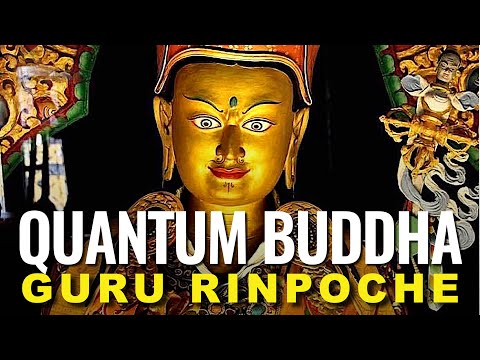 ▶Watch furtherGuru Rinpoche (Padmasambhava) DocumentaryBuddha Weekly · on YouTube
Image Sources
- YesheTsogyal.jpg · modern Tibetan painting / Public domain
- Padmasambhava (Orgyen Dorje Chang), with Yeshe Tsogyal, emanations, Nyingma gurus and Samantabhadra - 17th century Tibetan thangka.jpg · Unknown painter, 17th century Tibetan thangka / Public domain
Return to Nyingma's Founders.
